Messeregge Explained: Meaning, Uses, and Practical Guide
Understanding new or uncommon terms on the internet can sometimes feel confusing. One such word that has recently sparked curiosity is Messeregge. Many people searching for this term want to know what it means, where it comes from, and why it is being mentioned across different industries.
Although the word may appear unfamiliar at first, Messeregge carries an interesting background and practical relevance. In various contexts, it represents the idea of structured systems designed to improve efficiency and clarity. Whether in agriculture, trade show design, or conceptual communication frameworks, the term reflects the importance of organized structure.
In this detailed guide, we will explore the true meaning of Messeregge, its historical origins, how it is used in real-world environments, and why professionals across industries are paying attention to it.
What Is Messeregge?
Messeregge is a term that has been interpreted in multiple ways depending on the industry where it is used. At its simplest level, the word describes a structured tool or system designed to create order and efficiency.
In practical terms, the concept appears mainly in three areas:
Agriculture uses the term to describe a blade-based soil cultivation tool.
The exhibition industry refers to structural framing systems used in trade show booths.
Some modern digital discussions use the word metaphorically to describe structured communication methods.
Although these meanings seem different, they all share a common theme: creating structure in environments where precision and organization matter.
The Linguistic Origin of Messeregge
The origin of Messeregge can be traced to German language roots. The word is believed to combine two terms.
“Messer” translates to knife or blade.
“Egge” refers to a harrow, a farming tool used to break up soil.
Together, the literal meaning becomes “knife harrow,” which describes an agricultural tool that cuts through soil to prepare land for planting.
Over time, this practical farming term began to appear in other professional settings, particularly in European trade show design and technical discussions. The idea of structured cutting or shaping systems naturally translated into design frameworks and organizational concepts.
This evolution demonstrates how language often moves across industries as technologies and professional practices develop.
Messeregge in Agriculture
The most traditional use of Messeregge is found in farming and soil preparation.
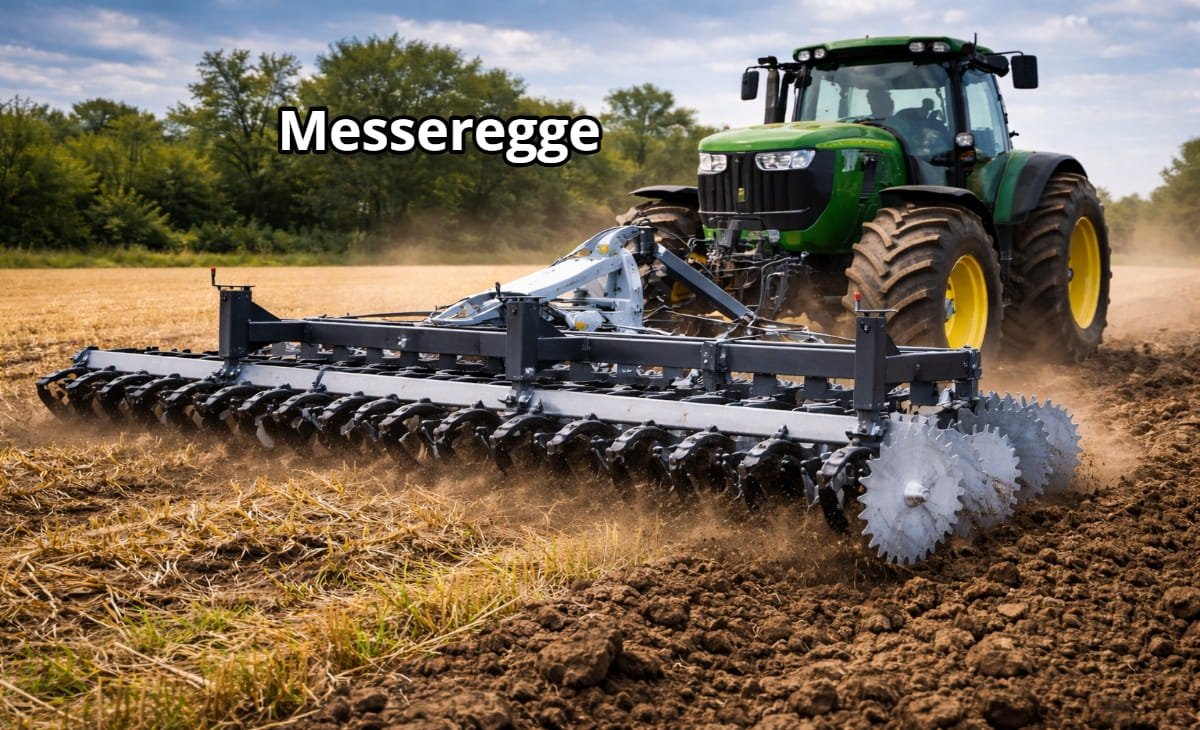
A Messeregge tool consists of rigid blades arranged across a cultivation frame. These blades slice through the top layer of soil, breaking apart clumps and creating a smoother surface for planting seeds.
Unlike flexible harrows, which rely on bending tines, the blade system provides a more precise cutting action. Farmers value this tool because it improves seedbed preparation while reducing soil disturbance in deeper layers.
Healthy soil structure is essential for crop productivity. When soil layers remain stable beneath the surface, they retain moisture and nutrients more effectively. The Messeregge approach allows farmers to achieve a balanced preparation process without damaging the underlying soil ecosystem.
In many modern farming systems, the tool is combined with tractors or multi-stage equipment. This allows farmers to cultivate and prepare fields more efficiently, reducing fuel consumption and field passes.
Suggested Visual
A useful diagram for this section would show a tractor pulling a blade-based cultivation tool across soil layers, illustrating how the blades cut through the topsoil while leaving deeper layers intact.
Messeregge in Trade Show and Exhibition Design
Another important context for Messeregge appears in the exhibition and event industry.
Trade shows require temporary structures that must be both visually appealing and structurally reliable. Booth spaces need frames to hold panels, lighting, digital screens, and promotional materials.
In this environment, Messeregge refers to structural framing systems that define the edges and support elements of exhibition booths.
These structures perform several critical roles. They establish clear booth boundaries, support display materials, and guide the movement of visitors through the space.
A well-designed structural framework can significantly influence how attendees interact with a booth. Visitors tend to feel more comfortable navigating spaces that appear organized and visually balanced.
In my own observation at industry exhibitions, booths that incorporate clean framing structures often attract more visitors simply because they look professional and easier to explore.
Suggested Visual
A diagram of a trade show booth skeleton structure could show the support frames, display panels, and lighting mounts connected through a Messeregge-style framework.
Messeregge as a Concept of Structured Communication
In recent years, the term Messeregge has occasionally appeared in discussions about digital communication and information management.
While not yet a formal academic theory, some strategists use the word metaphorically to describe structured communication frameworks. The idea is simple: in a world overloaded with information, structured messaging helps people understand content more easily.
Businesses and content creators often struggle with communication overload. Emails, social media posts, notifications, and advertisements compete for attention every day.
The Messeregge concept suggests that communication should follow a clear structure. Messages should have a defined purpose, logical order, and meaningful context.
Instead of sending large volumes of content, organizations benefit from focusing on clarity, relevance, and structure.
This philosophy aligns with modern digital marketing practices where well-organized information improves audience engagement and trust.
Benefits of Understanding Messeregge
Although the word may appear niche, the underlying concept offers several valuable insights.
First, structured systems improve efficiency. Whether in farming equipment or exhibition design, organized frameworks make processes smoother and more reliable.
Second, structure enhances clarity. In communication and design, clear frameworks allow people to understand information faster and more effectively.
Third, the concept encourages intentional planning. Instead of reacting to problems, professionals can build systems that prevent confusion or inefficiency from the start.
These benefits explain why variations of the Messeregge concept appear in different industries despite their unique challenges.
Common Misconceptions About Messeregge
Because the term is relatively uncommon, several misunderstandings surround it.
Some people believe Messeregge refers to a digital messaging platform similar to common communication apps. However, there is currently no widely recognized software platform operating under this name.
Another misconception is that the word is simply a misspelling of “messenger.” In reality, the term has historical roots in agricultural technology.
Others assume it refers only to farming equipment. While agriculture remains the origin of the term, its conceptual meaning has expanded into other fields over time.
Understanding these distinctions helps readers interpret the word correctly depending on the context where it appears.
Practical Applications of the Messeregge Concept
Even if someone never directly uses a Messeregge tool or exhibition structure, the concept can still be applied in everyday work.
Businesses can design clearer communication strategies by organizing information into logical sequences. Event planners can create structured booth designs that guide visitors naturally through displays. Farmers can use blade-based soil preparation tools to improve planting efficiency.
Website designers also apply similar principles when creating page layouts. Clean navigation, clear content sections, and balanced visual structures reflect the same philosophy behind Messeregge frameworks.
In all these cases, the goal remains the same: create systems that bring order and clarity to complex environments.
Frequently Asked Questions
What does Messeregge mean?
Messeregge generally refers to a structured tool or framework. In agriculture it describes a blade-based soil cultivation tool, while in exhibitions it refers to booth framing systems.
Where did the term Messeregge originate?
The word comes from German roots combining “Messer” meaning knife and “Egge” meaning harrow, referring to a soil cultivation tool.
Is Messeregge used in digital communication?
Some modern discussions use the term metaphorically to describe structured communication systems designed to improve clarity and organization.
Is Messeregge a product or brand?
No widely recognized product or global brand currently uses the name Messeregge. It is mostly a descriptive term used in different industries.
Why is Messeregge important in farming?
Messeregge tools help farmers prepare soil efficiently by cutting through topsoil layers, improving seedbed quality while preserving deeper soil structure.
Conclusion
Messeregge may not be a commonly discussed term, but its underlying concept has practical importance. From agriculture to trade show design and even digital communication, the idea behind the word focuses on structure, precision, and efficiency.
In farming, the Messeregge tool improves soil preparation. In exhibitions, structural frameworks create organized booth environments. Communication strategies, structured messaging helps audiences understand information more clearly.
The reason this concept continues to appear across different fields is simple: well-designed systems produce better results. When tools, spaces, or messages are organized thoughtfully, people interact with them more easily and effectively.
If you are interested in learning more about emerging concepts like Messeregge, explore related topics on structured design, modern agricultural techniques, and communication strategies. Sharing insights and experiences about these ideas can help professionals across industries build more efficient systems for the future.