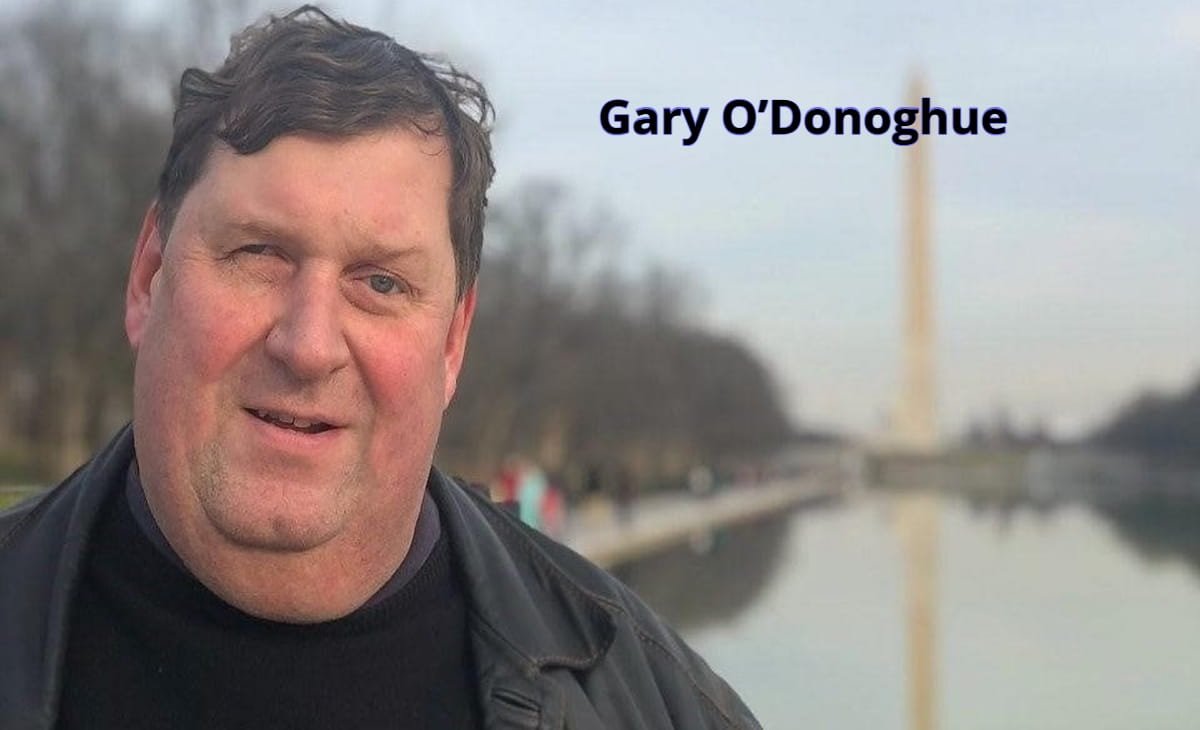
Gary O’Donoghue | BBC North America Correspondent
In a media climate defined by polarization, misinformation, and rapid news cycles, audiences increasingly seek journalists who combine authority with restraint. Among those consistently associated with disciplined political reporting is Gary O’Donoghue. As the North America Correspondent for BBC, he occupies a critical role: interpreting United States politics for a global audience while maintaining the editorial rigor expected of a public service broadcaster.
Search interest in Gary O’Donoghue typically reflects one of three intentions. Readers want to understand his professional background, evaluate his credibility, or examine how his reporting style differs from domestic U.S. correspondents. This article addresses all three dimensions with analytical depth, contextual insight, and verified information designed to provide more value than surface-level biographical summaries.
Professional Background and Career Development
Gary O’Donoghue is a senior journalist with the BBC, serving as its North America Correspondent based in Washington, D.C. His reporting focuses on U.S. politics, presidential administrations, Congress, foreign policy, and major national events. Over the years, he has covered multiple election cycles, high-stakes diplomatic developments, and constitutional crises that carried global implications.
Before relocating to Washington, O’Donoghue built his reputation within UK political and security reporting. His early assignments included coverage of domestic political affairs and defense-related matters. This foundation in policy reporting equipped him with the analytical discipline necessary for interpreting American governance structures for international audiences.
A defining aspect of his professional journey is that he has been blind since childhood due to retinal detachment. Rather than limiting his capacity as a correspondent, this reality shaped his journalistic strengths. In broadcast environments, precision listening is often undervalued compared to visual presentation. O’Donoghue’s reporting style reflects heightened auditory awareness, an asset in interviews, live debates, and press briefings where tone and hesitation reveal as much as prepared statements.
Role as BBC North America Correspondent
The position of North America Correspondent is not merely a reporting assignment; it is a strategic post within international journalism. The United States remains central to global political, economic, and military systems. Decisions made in Washington frequently affect markets, alliances, and diplomatic relations worldwide.
O’Donoghue’s responsibilities include:
Contextualizing U.S. political developments for UK and global audiences.
Explaining constitutional mechanisms such as the Electoral College or congressional oversight processes.
Providing live analysis during breaking news events.
Conducting interviews with senior political figures and policymakers.
Unlike domestic U.S. correspondents who report primarily for American viewers, O’Donoghue must translate complex American political dynamics into accessible explanations for audiences less familiar with institutional nuances. This interpretive role requires both subject expertise and cultural literacy.
Reporting Style: Authority Without Sensationalism
One of the most notable characteristics of O’Donoghue’s journalism is measured delivery. In high-pressure broadcast situations particularly during election nights or major political crises his tone remains composed and analytical.
From a professional newsroom perspective, this calm presentation enhances credibility. Research from institutions such as the Nieman Lab at Harvard has highlighted audience preference for clarity and restraint over theatrical reporting during periods of uncertainty. O’Donoghue’s approach aligns closely with these findings.
His interviews are structured around preparation rather than confrontation. He frequently deploys precise follow-up questions that require direct answers without relying on aggressive rhetoric. This technique reflects traditional public service broadcasting standards, emphasizing accountability over spectacle. A visual timeline of his major interviews and election coverage milestones would effectively illustrate the consistency of his reporting trajectory across administrations.
Coverage of U.S. Elections and Political Transitions
O’Donoghue has reported extensively on U.S. presidential elections, including contentious and historically significant cycles. Election reporting at this level involves complex coordination between field teams, data analysts, producers, and studio anchors.
The core challenge lies in balancing immediacy with verification. Premature analysis can undermine credibility, while delayed reporting risks irrelevance. O’Donoghue’s election coverage demonstrates disciplined pacing interpreting confirmed data rather than speculation.
For international viewers, he often clarifies distinctions between popular vote outcomes and Electoral College results. A simple infographic explaining these structural differences would significantly enhance reader comprehension in a digital format.
Navigating Political Polarization
Modern U.S. politics is marked by intense ideological division. Correspondents operating in Washington frequently face scrutiny from political actors across the spectrum. In such environments, maintaining editorial neutrality is both essential and challenging.
O’Donoghue has occasionally encountered public pushback during interviews or press briefings. However, such exchanges are inherent to political accountability journalism. The ability to withstand partisan criticism without compromising professional standards is indicative of institutional backing and individual resilience.
Public service broadcasters such as the BBC adhere to strict editorial guidelines. External readers interested in these standards can review official BBC Editorial Guidelines documentation to better understand the framework governing correspondents like O’Donoghue.
Accessibility and Modern Journalism
O’Donoghue’s career also contributes meaningfully to conversations about accessibility in media professions. Technological advancements including screen-reading software, digital audio workflows, and newsroom collaboration systems have broadened opportunities for journalists with disabilities.
However, technology alone does not guarantee success. Mastery of subject matter, structured preparation, and strong editorial support remain decisive factors. O’Donoghue’s longevity in a competitive international posting underscores professional competence rather than symbolic representation.
A behind-the-scenes diagram of how correspondents coordinate with producers, editors, and technical teams would provide valuable context for readers unfamiliar with broadcast operations.
Challenges in International Correspondence
International correspondents face layered challenges beyond standard reporting duties. These include:
Operating across time zones while meeting live broadcast demands.
Interpreting foreign political culture accurately.
Balancing home audience expectations with on-ground realities.
Ensuring source credibility in politically sensitive contexts.
O’Donoghue’s tenure in Washington demonstrates sustained adaptation to these conditions. The durability of his assignment reflects institutional trust and consistent performance.
Broader Impact on Global Audiences
The BBC maintains one of the largest international news audiences globally. O’Donoghue’s reporting shapes how millions of viewers and listeners outside the United States perceive American governance.
When major U.S. policy shifts occur whether related to trade, defense, or climate agreements his analysis often contextualizes implications for Europe and beyond. This interpretive role elevates his position from correspondent to cross-continental communicator. For media professionals analyzing international news ecosystems, his work provides a case study in transatlantic political reporting.
Frequently Asked Questions
Who is Gary O’Donoghue?
Gary O’Donoghue is a senior journalist with the BBC and serves as its North America Correspondent based in Washington, D.C.
What does Gary O’Donoghue report on?
He reports on U.S. politics, presidential administrations, Congress, foreign policy developments, and major national events for global audiences.
Is Gary O’Donoghue blind?
Yes. He has been blind since early childhood due to retinal detachment and has built a distinguished career in international journalism.
Where does he work?
He works for the BBC as its North America Correspondent in Washington, D.C.
Why is his reporting significant?
His reporting is significant because it translates complex U.S. political developments into accessible, balanced analysis for international audiences.
Conclusion
Gary O’Donoghue’s career reflects the enduring principles of disciplined journalism: preparation, neutrality, and composure under pressure. His reporting illustrates how public service broadcasting can maintain authority without resorting to sensationalism.
For readers interested in political reporting, media ethics, or international correspondence, his professional trajectory offers valuable lessons in resilience and credibility. To deepen your understanding of global journalism standards, explore related articles on political correspondence frameworks or newsroom operations. If you found this profile informative, consider sharing it or engaging in discussion about the evolving role of international correspondents in shaping public understanding.