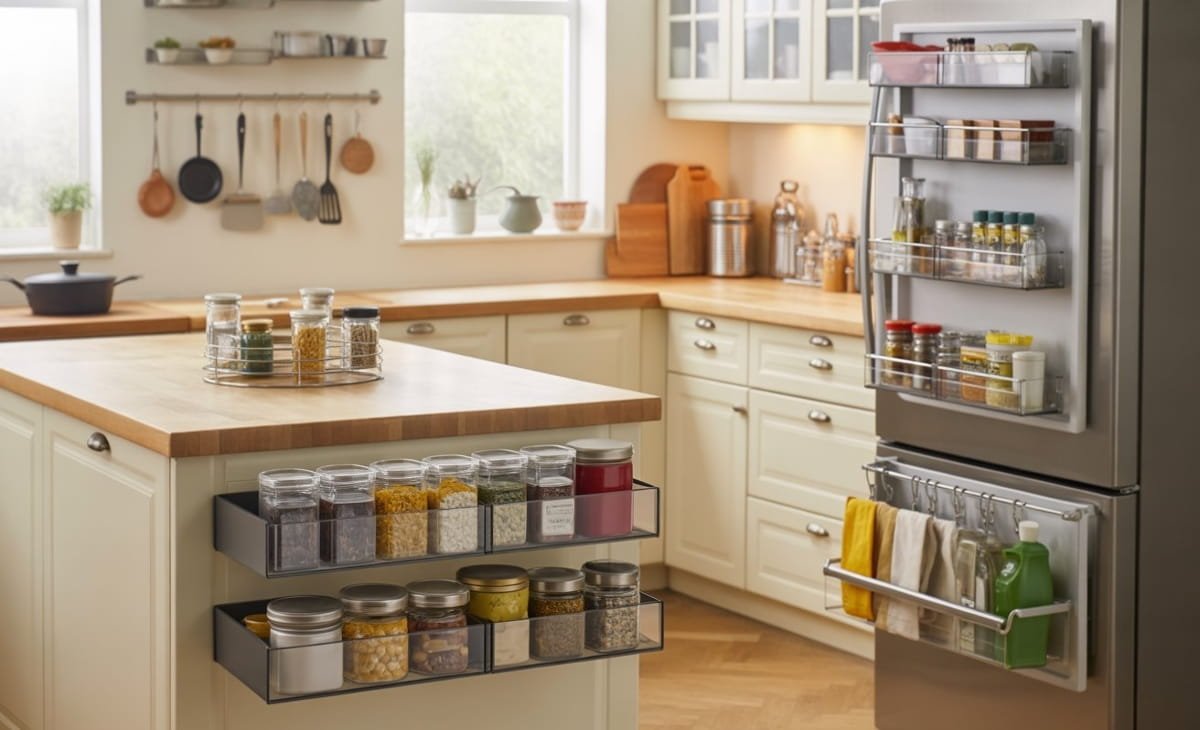
Kitchen Organization Hacks That Actually Work for Real Homes
If your kitchen always feels cluttered no matter how often you clean it, you’re not alone. Most kitchens aren’t disorganized because people are lazy, they’re disorganized because they were never set up to work with real human habits. After years of testing storage layouts, watching families cook in their own homes, and reorganizing everything from tiny apartments to full-size family kitchens, I’ve learned one truth: good kitchen organization is behavioral design, not just storage.
This guide to kitchen organization hacks is built around that idea. These aren’t Pinterest-only ideas that look good for a photo and fail after a week. These are systems that hold up when you’re tired, hungry, short on time, or cooking for multiple people. If your goal is to save time, reduce stress, and finally stop reorganizing the same drawer every month, you’re in the right place.
What Kitchen Organization Hacks Really Mean (And Why Most Advice Fails)
Kitchen organization hacks are practical systems that reduce friction in everyday cooking, cleaning, and storage. They go beyond buying containers and instead focus on how often you use items, how you move in the space, and how your brain categorizes things.
Most online advice fails because it assumes ideal behavior. It expects you to decant everything, label perfectly, and maintain museum-level order. Real kitchens don’t work like that. Real kitchens need forgiveness built into them. The best hacks make the “right” choice the easiest one, even on bad days.
Why Kitchen Organization Matters More Than Ever
Modern kitchens do more than cook meals. They’re coffee bars, homework stations, snack zones, and social hubs. When the kitchen is chaotic, it quietly drains energy. Studies on environmental psychology show that visual clutter increases cognitive load and stress levels, even when people don’t consciously notice it. Harvard research on decision fatigue also supports the idea that simplified environments reduce mental exhaustion .
A well-organized kitchen saves time, lowers food waste, and improves eating habits because ingredients are visible and accessible. It also makes cleaning faster, which means mess doesn’t pile up emotionally or physically.
Common Kitchen Organization Myths That Make Things Worse
One persistent myth is that minimalism is the only solution. You don’t need fewer things, you need better placement. Another myth is that matching containers equal organization. Containers help, but only after categories and zones are defined. The biggest myth is that once organized, a kitchen stays that way. In reality, good systems are meant to be adjusted as seasons, family size, and routines change.
The Core Principle Behind Every Successful Kitchen Organization Hack
Every effective kitchen organization system follows one rule: store items where they are used, not where they fit. When storage follows function, mess disappears naturally. When it doesn’t, clutter keeps coming back no matter how much effort you put in.
Before touching a single shelf, observe how you move through your kitchen for a week. Notice where items land naturally. Those spots are clues not problems.
Zone-Based Kitchen Organization: The Foundation System
The most reliable kitchen organization hack is zoning. Instead of organizing by item type alone, you organize by activity.
The cooking zone includes pots, pans, cooking oils, spices, and utensils near the stove. The prep zone holds knives, cutting boards, mixing bowls, and measuring tools. The cleaning zone contains dish soap, towels, trash bags, and dishwasher supplies. A food storage zone houses pantry items and containers. A beverage or snack zone keeps quick-grab items accessible without disrupting cooking.
This approach reduces unnecessary movement and prevents overcrowding in prime areas. In homes where zoning is applied correctly, people cook faster and clean more consistently without trying harder.
A simple visual diagram showing kitchen zones over a standard layout can help readers instantly understand this concept.
Deep Kitchen Drawer Hacks That Change Daily Cooking
Deep drawers are often underused or badly stacked. The trick is vertical storage. Plates stored upright, lids slotted vertically, and pans stacked by frequency of use reduce digging and noise. In one client kitchen, switching to vertical pan storage cut cooking prep time by nearly 20% simply because everything was visible and reachable.
Drawer dividers should match the actual items, not the drawer itself. Adjustable bamboo or metal systems work best long-term because kitchen tools evolve.
Pantry Organization Hacks That Reduce Food Waste
A messy pantry doesn’t just look bad it costs money. When items disappear behind each other, they expire unused. The most effective pantry organization hack is visibility over aesthetics.
Group food by use rather than category. Breakfast items together. Baking items together. Quick meals together. Clear containers help, but only when labels are large and readable from a standing position. Avoid over-decanting items you don’t use weekly; original packaging often carries critical information.
A lazy Susan works best for oils, sauces, and condiments used multiple times per week. High shelves should store backstock, not daily essentials. A before-and-after pantry photo showing visibility improvement would add strong value here.
Small Kitchen Organization Hacks That Create Space Without Renovation
Small kitchens benefit most from friction reduction. Vertical wall storage, magnetic knife strips, over-cabinet hooks, and toe-kick drawers turn dead space into functional storage. The key is restraint. One or two vertical solutions beat covering every surface.
Under-sink areas improve dramatically when cleaning supplies are hung on tension rods or door-mounted caddies. This keeps the base clear and prevents leaks from damaging products.
Countertop Organization Without Killing Usable Space
Clear countertops are a result, not a rule. If you use your coffee machine daily, it belongs out. The hack is clustering. Group frequently used items on a tray so they read as intentional rather than messy.
Appliance garages or lift cabinets are excellent for mixers and blenders if available. Otherwise, store heavy appliances at waist height to avoid injury and inconvenience.
Real-World Case Insight: Why One System Worked for a Family of Five
In a household with three kids, traditional labeled systems failed within weeks. What worked instead was open bins labeled by color and note-based categories like “School Snacks” and “Quick Dinners.” The parents stopped enforcing perfection, and the kids could participate without instructions.
This reinforced a key lesson: systems that include all users last longer than systems designed for one person’s preferences.
Tools and Products That Actually Help (Not Sponsored)
Pull-out cabinet shelves significantly improve accessibility for lower cabinets. Adjustable drawer organizers outperform fixed plastic trays long-term. Pegboard drawer systems for pots and lids are one of the most adaptable solutions available today.
Avoid trend-based tools that solve imaginary problems. If it doesn’t save time or reduce effort, it’s not a hack, it’s décor.
Maintaining an Organized Kitchen Without Reorganizing Constantly
The secret to maintenance is review, not discipline. Every three months, reassess what’s being used. If something migrates repeatedly, move its home instead of fighting the habit. Organization should adapt to life, not the other way around.
Visual Content Recommendations
A zone-based kitchen map, before-and-after drawer transformations, and a pantry visibility comparison chart would dramatically improve comprehension. Short annotated diagrams work better than complex photos for instructional clarity.
Frequently Asked Questions
What is the fastest way to organize a kitchen?
Start with zones and relocate only daily-use items first. This delivers immediate results without full reorganization.
How do I organize my kitchen with very little storage?
Use vertical space selectively and store by frequency of use. Remove duplicates before adding organizers.
Are clear containers better than labeled boxes?
Clear containers work best when visibility matters. Labels matter more when containers are opaque.
How often should a kitchen be reorganized?
Major reorganization once a year is enough. Minor adjustments every few months keep systems functional.
Do kitchen organization hacks really save time?
Yes. Reduced searching, fewer steps, and better visibility directly lower daily task time.
Conclusion
Kitchen organization hacks aren’t about perfection, they’re about alignment. When your kitchen reflects how you actually cook, eat, and clean, order becomes automatic. Start small. Change one zone. Test one drawer. Let function lead design.
If you want deeper guidance, explore our related guide on pantry optimization systems or book a professional kitchen workflow consultation. And if you’ve tried a hack that truly changed your kitchen, share it real solutions grow through shared experience.