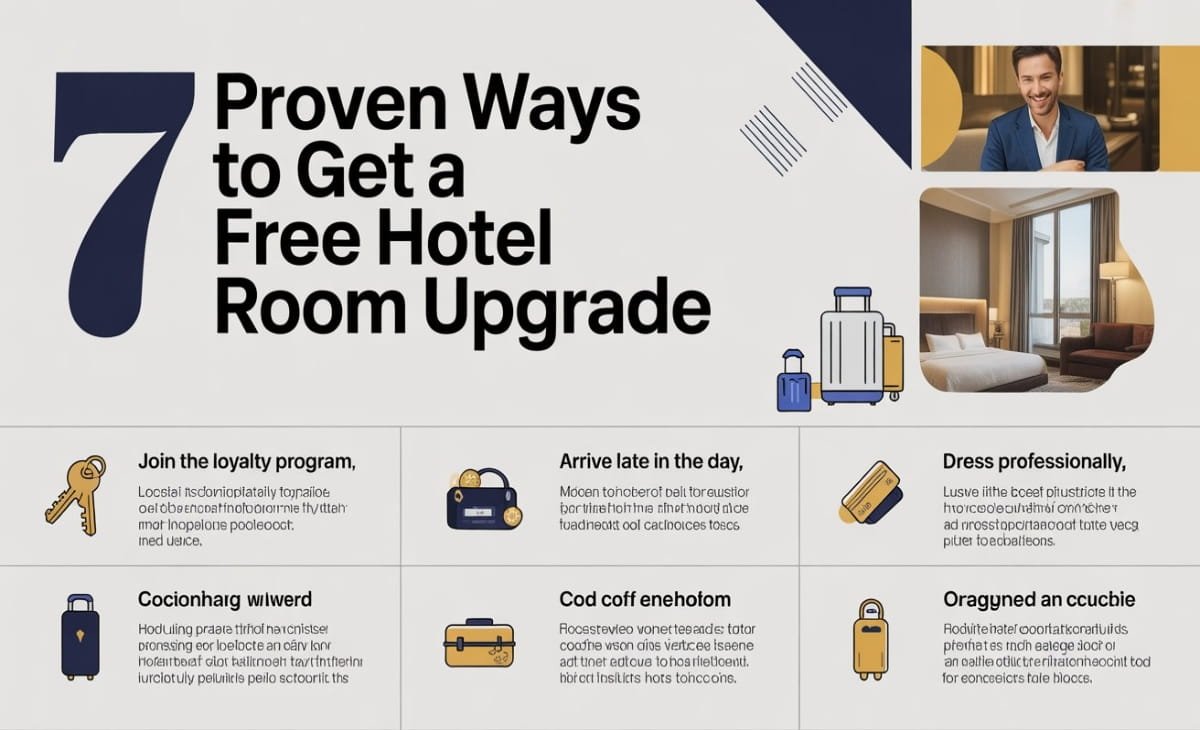
7 Proven Ways to Get a Free Hotel Room Upgrade
If you’ve ever checked into a hotel and wondered how some guests magically end up with corner suites, skyline views, or rooms twice the size of what they booked, you’re not alone. A hotel room upgrade feels like a small luxury, but in reality, it can transform an ordinary stay into something memorable, sometimes even life-changing when comfort, space, or quiet truly matters.
What most travelers don’t realize is that free hotel room upgrades are not random acts of generosity. They are often the result of timing, psychology, loyalty systems, and unspoken hotel policies working quietly behind the scenes. I’ve spent over a decade traveling for work and leisure, staying in everything from boutique hotels to major international chains, and I’ve seen firsthand how upgrades are awarded and why some guests never get them.
This guide exists to close that gap. Instead of vague advice like “just ask nicely,” you’ll learn proven, realistic strategies that align with how hotels actually operate today. With travel rebounding and hotels focusing more on guest satisfaction metrics than ever before, understanding how to position yourself for a hotel room upgrade in 2025 gives you a genuine edge.
What Is a Hotel Room Upgrade, Really?
A hotel room upgrade happens when a guest is assigned a better room than the one originally booked, without paying extra. This could mean a higher floor, a better view, more square footage, access to a lounge, or even a suite. Not all upgrades are equal, and that distinction matters.
Hotels typically categorize rooms by revenue priority. When higher-tier rooms remain unsold close to check-in, they become strategic assets rather than wasted inventory. At that point, upgrading the “right” guest improves satisfaction scores, increases loyalty, and often leads to positive reviews. Understanding this business logic is the foundation of every successful upgrade strategy.
Why Hotels Give Free Room Upgrades
Upgrades are not charity; they’re calculated decisions. Hotels track guest satisfaction obsessively through internal scoring systems and post-stay surveys. A complimentary upgrade can significantly increase a guest’s perception of value without materially increasing costs.
Industry data shared by hospitality analysts and publications like Harvard Business Review has shown that perceived value often matters more than actual spend. A guest who feels valued is more likely to return, join loyalty programs, and recommend the property. That’s why upgrades are usually given to guests who signal long-term value, flexibility, or positive risk.
1. Timing Your Check-In Is More Powerful Than Status
One of the most overlooked factors in receiving a hotel room upgrade is when you arrive. Early afternoon check-ins often happen before housekeeping has fully turned over premium rooms. Late-night arrivals, on the other hand, benefit from real-time inventory clarity.
In my experience, checking in between 6:30 and 9:00 p.m. dramatically increases upgrade chances. At this point, the front desk knows exactly which premium rooms will remain empty overnight. Offering one to a guest costs nothing and instantly improves the interaction.
This works especially well during weekdays or shoulder seasons, when business travelers cancel last-minute or don’t show up. The hotel would rather place you in a better room than let it sit unused.
2. Loyalty Programs Matter Even at Entry Level
You don’t need elite status to benefit from loyalty programs, but you do need to be enrolled. Front desk systems visibly flag loyalty members, even at the lowest tier. That small badge often becomes the deciding factor when choosing which guest receives a complimentary hotel room upgrade.
What many travelers miss is that hotels prefer upgrading members because they are trackable. If you later leave a review or receive a satisfaction survey, your feedback carries more internal weight. Chains like Marriott, Hilton, and Hyatt openly state in their program terms that upgrades are “subject to availability,” but internal staff training encourages rewarding members first.
Even if you only stay once or twice a year, joining costs nothing and quietly improves your odds.
3. Book the Cheapest Room But Choose the Right Hotel
This sounds counterintuitive, but it works. Hotels are more likely to upgrade guests who book entry-level rooms than mid-tier rooms. The reason is simple: upgrading a base room guest creates a bigger perceived jump in value.
However, this only works in hotels with multiple room categories and unsold premium inventory. Boutique hotels with limited room variation rarely offer meaningful upgrades. Larger urban hotels, resorts, and business-focused properties are far more flexible.
From personal experience, city-center hotels on Sundays and resort hotels midweek are the sweet spots. The inventory exists, and demand is uneven.
4. Polite, Informed Asking Beats Confidence Alone
Yes, you should ask but how you ask matters more than whether you ask at all. A vague request like “Any chance of an upgrade?” puts pressure on staff and often leads to a polite no.
A more effective approach acknowledges availability and gives the agent flexibility. For example, mentioning that you’re celebrating something, or that you’d appreciate “anything quieter or higher if available,” signals openness rather than entitlement.
Front desk agents are trained to read tone. Calm, friendly curiosity works far better than confidence bordering on expectation. In many of my stays, upgrades were offered only after a short, genuine conversation not at the first sentence.
5. Special Occasions Work If They’re Believable
Celebrations do influence upgrade decisions, but only when they sound authentic. Hotels see honeymoon notes and birthday flags daily. What cuts through is specificity and timing.
Mentioning an anniversary during a low-occupancy period carries more weight than during peak season. Hotels are far more generous when they can afford to be. I once received a suite upgrade simply because I noted it was my first stay at that property after years with the same brand.
The key is honesty. False claims can backfire if staff verify details, especially at higher-end properties.
6. One-Night Stays Are Upgrade Gold
Hotels are significantly more likely to upgrade guests staying one night than those staying multiple nights. This is due to inventory flexibility. Moving a guest for one night is operationally easy; doing so for four nights is risky.
If you’re booking a short stay, especially midweek, your chances increase dramatically. Many of my best hotel room upgrades happened on single-night business trips where premium rooms would otherwise sit empty.
This is also why airport hotels and conference hotels quietly offer some of the best upgrades when events end early.
7. Be the Guest Staff Wants to Reward
This factor is rarely discussed, but it’s real. Hotels empower front desk staff to make judgment calls. They remember guests who treat them with respect, patience, and warmth especially during busy shifts.
A calm demeanor during a delayed check-in or system issue can lead to unexpected generosity. I’ve seen upgrades offered not because a guest asked, but because they were kind when it mattered.
Hospitality is still a human industry. The human element remains one of the most reliable upgrade strategies available.
Common Myths About Hotel Room Upgrades
Many travelers believe tipping guarantees upgrades, but in most branded hotels, this can make staff uncomfortable or violate policy. Others assume booking through third-party sites eliminates upgrade chances. While direct bookings help, I’ve personally received upgrades through major platforms when inventory allowed.
The biggest myth is that upgrades are rare. In reality, they happen daily just not evenly.
Visual Suggestions to Enhance This Article
A simple room category comparison chart showing “Booked vs Upgraded Room Types” would help readers understand value differences. A hotel occupancy timeline graphic could visually explain why late check-ins matter. Screenshots of loyalty program dashboards could also demonstrate how even basic membership status appears to hotel staff.
Frequently Asked Questions
Do hotels really give free room upgrades?
Yes, hotels regularly offer complimentary upgrades when higher-category rooms remain unsold and the guest meets internal criteria.
Is it better to ask for a hotel room upgrade at check-in or before arrival?
Asking at check-in is usually more effective because front desk staff have real-time inventory visibility.
Do loyalty programs guarantee upgrades?
No upgrade is guaranteed, but loyalty members are prioritized when upgrades are available.
Can you get upgraded if you book through a third-party site?
Yes, although direct bookings have priority, upgrades can still happen if inventory allows.
Are hotel room upgrades more common on certain days?
Yes, Sundays, midweek stays, and off-peak seasons offer the highest upgrade potential.
Conclusion
A hotel room upgrade isn’t about luck, it’s about alignment. When your timing, booking choice, attitude, and awareness match how hotels operate, upgrades become surprisingly common.
If you travel even a few times a year, applying these seven proven strategies can quietly elevate every stay without increasing your budget. Comfort, space, and better experiences are often already available; you just need to know how to unlock them.
If you found this guide helpful, explore our related article on how to choose hotels that reward loyal guests, or share your own upgrade experiences in the comments. Real stories help travelers travel smarter.